
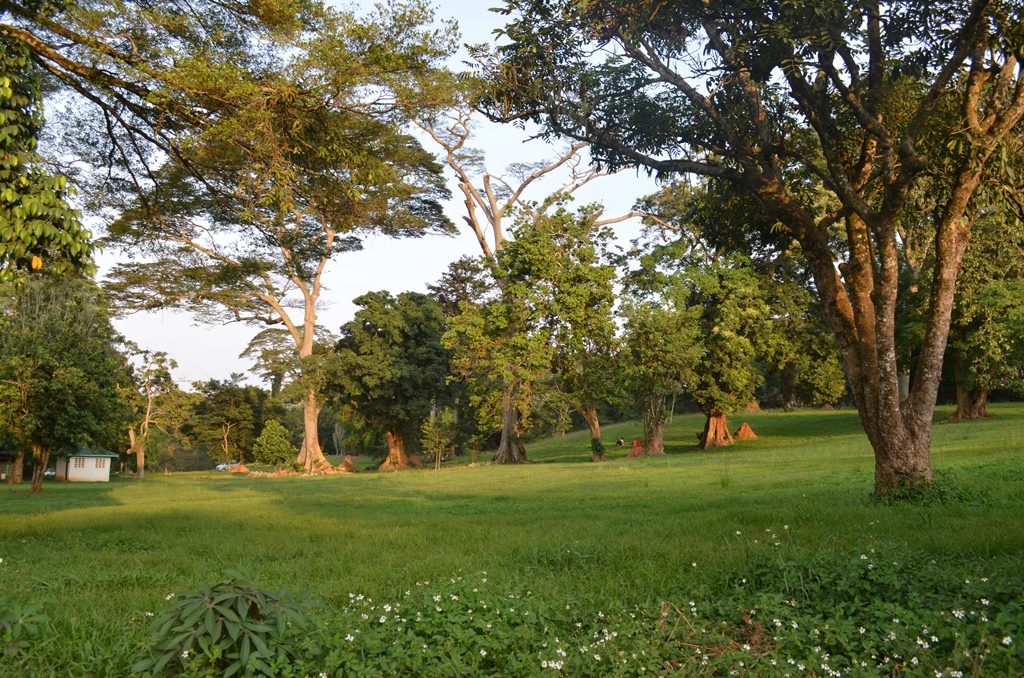
Established in 1898, the Entebbe Botanical Garden holds a significant place in the annals of Uganda's history. It was initially conceived as an experimental station for introducing and cultivating various plant species from around the world. Over the years, the garden has evolved into a sanctuary of diverse flora, attracting nature enthusiasts, researchers, and tourists alike.
The garden boasts an impressive collection of over 300 plant species, including indigenous and exotic varieties. Visitors can wander through the tranquil pathways and marvel at the towering mahogany trees, vibrant bougainvillea, and fragrant frangipani. The garden also features a captivating rose garden, showcasing a kaleidoscope of colors and scents.
Beyond its botanical wonders, the Entebbe Botanical Garden is steeped in historical significance. It served as a crucial research center during the British colonial era, playing a pivotal role in the development of Uganda's agricultural industry. The garden's rich heritage is evident in the well-preserved colonial architecture, including the iconic Main Building, which now houses the Uganda Virus Research Institute.
Today, the Entebbe Botanical Garden stands as a testament to Uganda's commitment to conservation and environmental preservation. It serves as an important educational resource for students, researchers, and the general public, promoting awareness about the significance of biodiversity and sustainable practices.
In essence, the Entebbe Botanical Garden is a captivating fusion of natural beauty, historical significance, and scientific importance. It offers visitors a chance to immerse themselves in the splendor of nature, while gaining insights into Uganda's rich heritage and ecological endeavors.