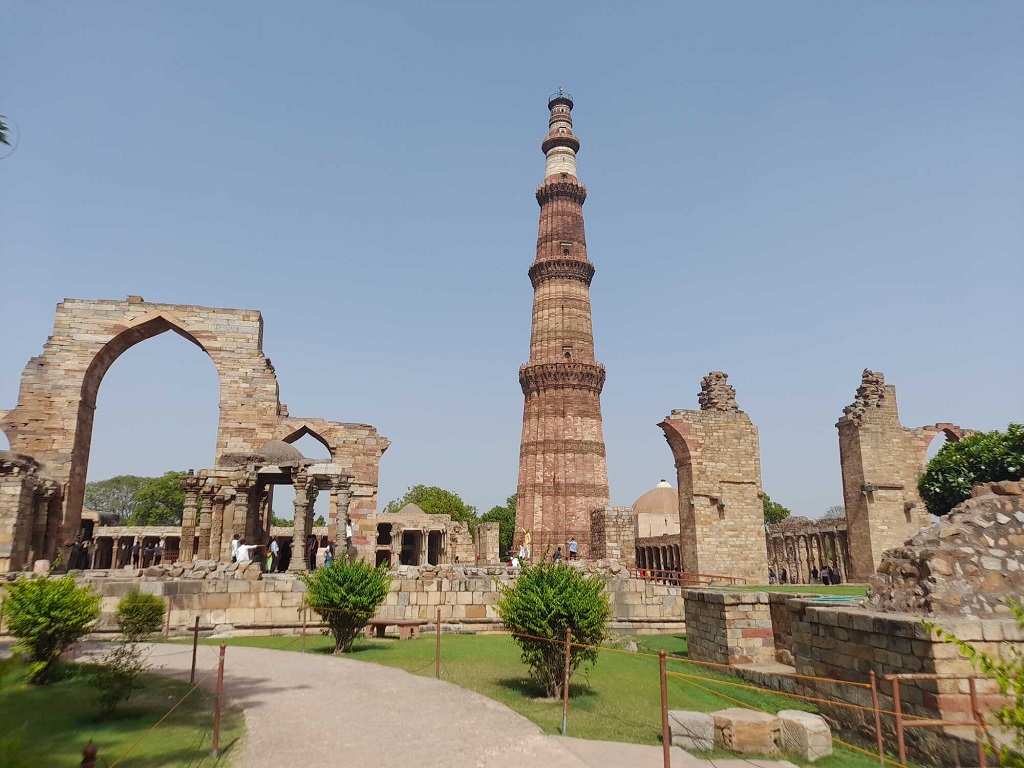
The Qutub Minar is made of red sandstone and white marble and is intricately carved with verses from the Quran and geometric patterns. It rises to a height of 72.5 meters (238 feet) and has five distinct storeys, each with its own unique design. The minaret is surrounded by a complex of other structures, including the Quwwat-ul-Islam Mosque, the oldest surviving mosque in India, and the Alai Darwaza, an ornate gateway built in the 14th century.
The Qutub Minar is not only a stunning architectural marvel but also holds great historical significance. It served as a victory tower, a call to prayer for the faithful, and an astronomical observatory. Over the centuries, it has withstood the test of time, including several earthquakes, and remains a symbol of Delhi's rich cultural heritage.
The Qutub Minar is found in the Qutub Minar complex, along with Alauddin Khalji's mausoleum, the Quwwat-ul-Islam mosque, and the Iron Pillar.